Waymo has temporarily pulled its driverless taxis from all US freeways, per the BBC. The move follows a California ban on the company's driverless vehicles operating on state freeways after a series of traffic incidents. By the end of this piece, you'll understand why freeways are such a hard test for robotaxis and what to watch as this plays out.
What's confirmed is limited, so here it is plainly. According to the BBC, California regulators acted over safety concerns involving construction zones and traffic-control incidents. Waymo says it is reviewing its performance and working with officials, and regular city-street service continues.
This piece focuses on one question: why does the freeway make autonomy so much harder than the city?
What actually changed
Two things, per the BBC's reporting:
- California banned Waymo's driverless vehicles from state freeways following a series of traffic incidents.
- Waymo then temporarily suspended driverless freeway operations across the US, not just in California.
The suspension is described as temporary. City-street rides are unaffected. I don't have details on how many incidents occurred, where, or whether anyone was hurt, so treat any claim that goes beyond the above with caution.
Why freeways are a different problem
It's tempting to assume highways are the easy part. Lanes are marked, there are no pedestrians, and nobody is running a stop sign. For human drivers, freeway driving can feel like the relaxed end of the spectrum. For a driverless system, the trade-offs are different.
Speed shrinks your margin for error
At freeway speeds, a car covers a lot of ground before it can react. Anything unexpected, such as debris, a stopped vehicle, or a lane that suddenly isn't a lane, leaves much less time to detect, decide and act. City driving is slower and more forgiving, even though it's busier.
Fewer problems, but nastier ones
City streets throw constant, varied challenges at a driverless car, but at low speeds. Freeways present fewer situations, and the rare ones can be high stakes. Engineers call these edge cases, and they're the heart of this story.
The construction zone problem
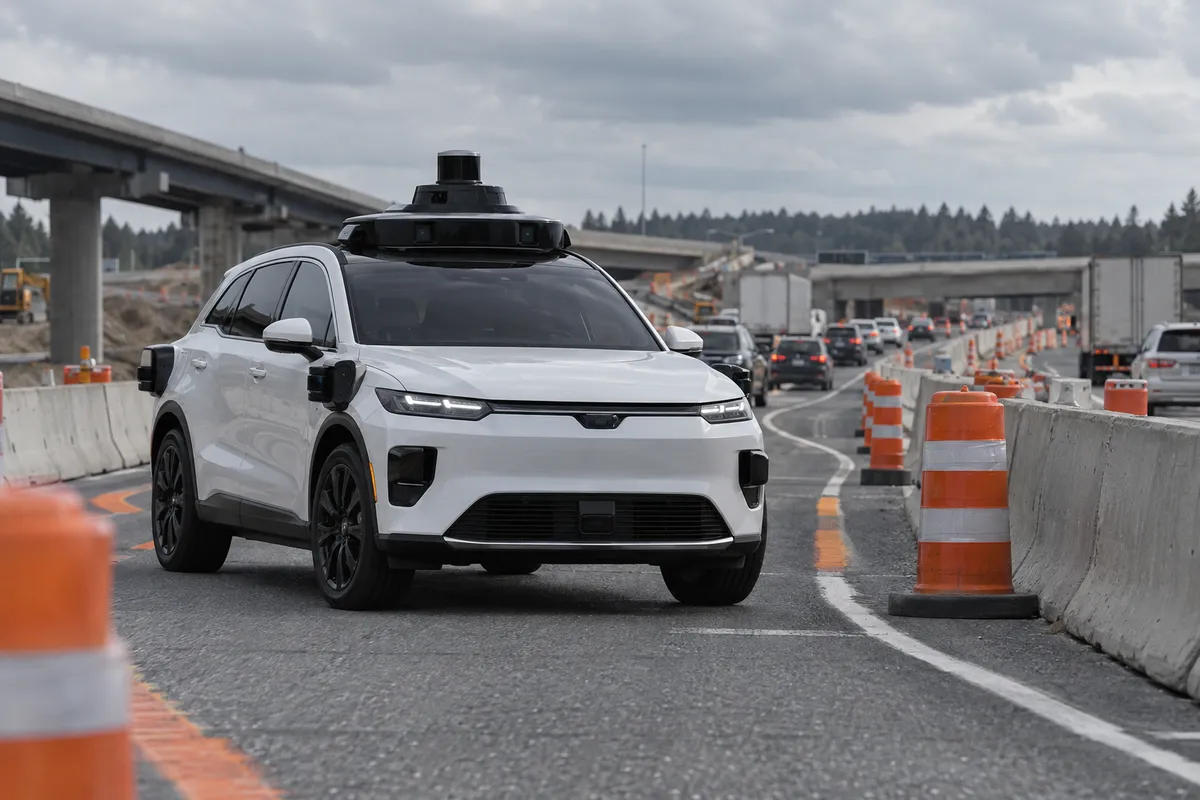
Construction zones were a named concern in the regulatory action, per the BBC's summary of the situation. That fits what makes them hard in general. They're temporary, so the map in the car's memory may be wrong. Lane lines may be shifted, covered, or contradictory. Cones, barrels and signs replace the normal rules. Sometimes a person with a flag or a worker directing traffic overrides what the road markings say.
Human drivers handle this with judgment and a willingness to read the situation, even if it means bending a rule. A driverless system has to do the same safely, every time, at speed. That's a high bar, and it's the sort of scenario where a system can look excellent across millions of ordinary miles and still stumble on an odd one.
Safety claims versus what people see
This is the real tension in the robotaxi business. Companies like Waymo make strong safety arguments based on aggregate data. Regulators and the public, though, react to specific incidents, especially ones that look strange or alarming on video. A car confused by a construction zone makes a vivid story even if overall crash numbers are favorable.
I can't verify safety statistics here, so I won't quote any. My take: the aggregate case and the incident case are both legitimate, and neither cancels the other. A system can be safer on average and still have a failure pattern that deserves a pause.
What it means for robotaxi expansion
Freeway access matters commercially. Airport runs, longer trips and cross-town routes often depend on highways. Without them, robotaxis are stuck as a city-street product, which limits where they're useful and how competitive they are against a human-driven ride.
The suspension reaching beyond California suggests Waymo is treating this as a company-wide review rather than a local issue. That's my reading, not something the company has stated. How quickly service returns will likely depend on what the review finds and what officials want to see.
What to watch next
- Waymo's findings. Does the company identify a specific, fixable cause around construction zones?
- Regulators' conditions. Will California set requirements for returning to freeways?
- Rider impact. City service continues, so check your app before planning a ride that relies on a highway.
- Rival behavior. Other autonomous operators expanding into complex environments will face the same scrutiny.
The takeaway
If you follow autonomous tech, judge it by how it handles the weird stuff, not the routine miles. Watch for Waymo's review results and California's terms for return, because they'll show whether freeway robotaxis are a short delay or a longer rethink.